When Should You Polish Your Car: Ideal Frequency, Scratch Removal, and Wax vs Polish Guide
Introduction
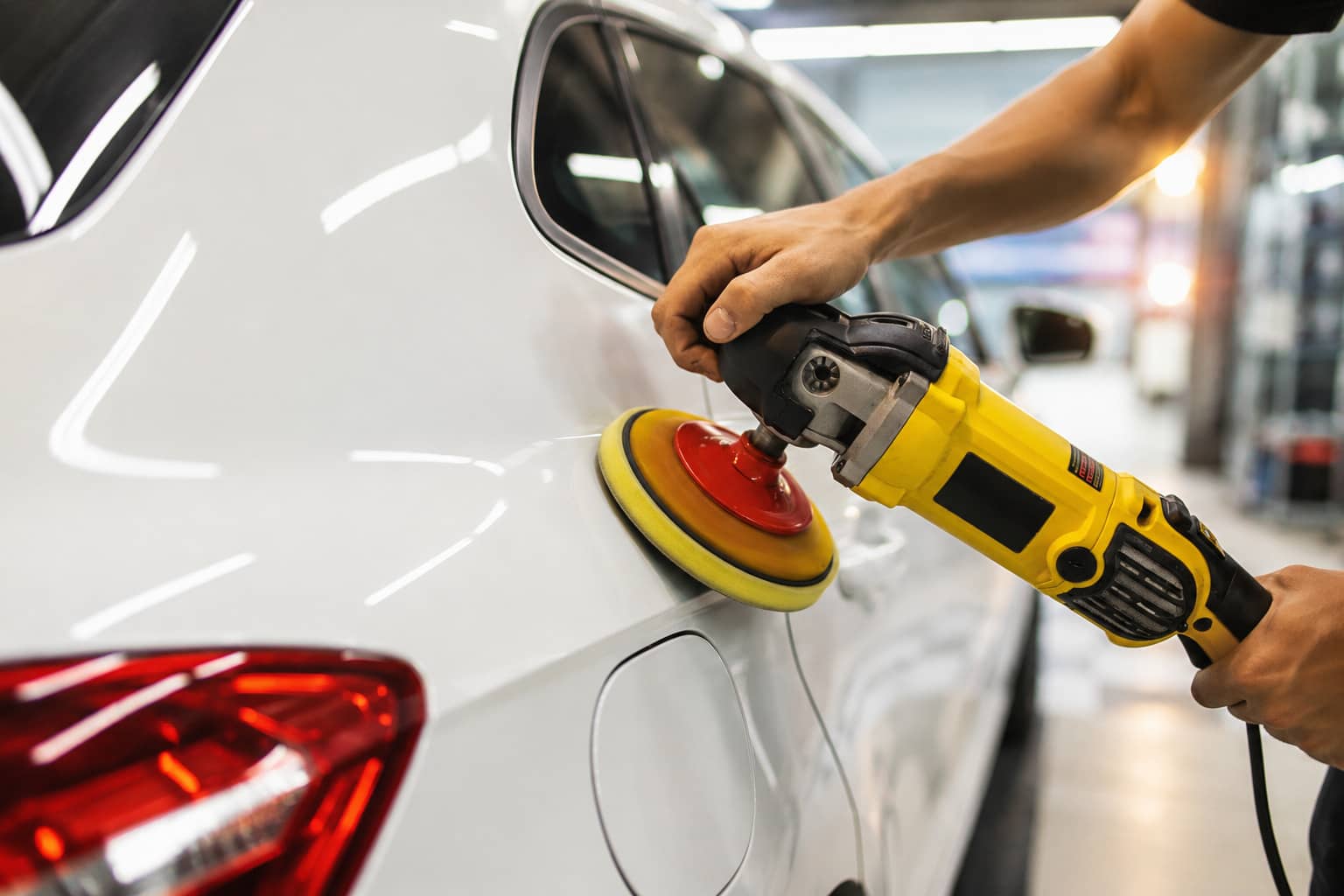
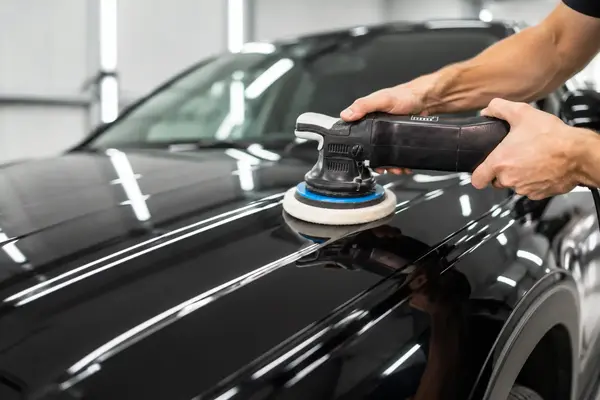
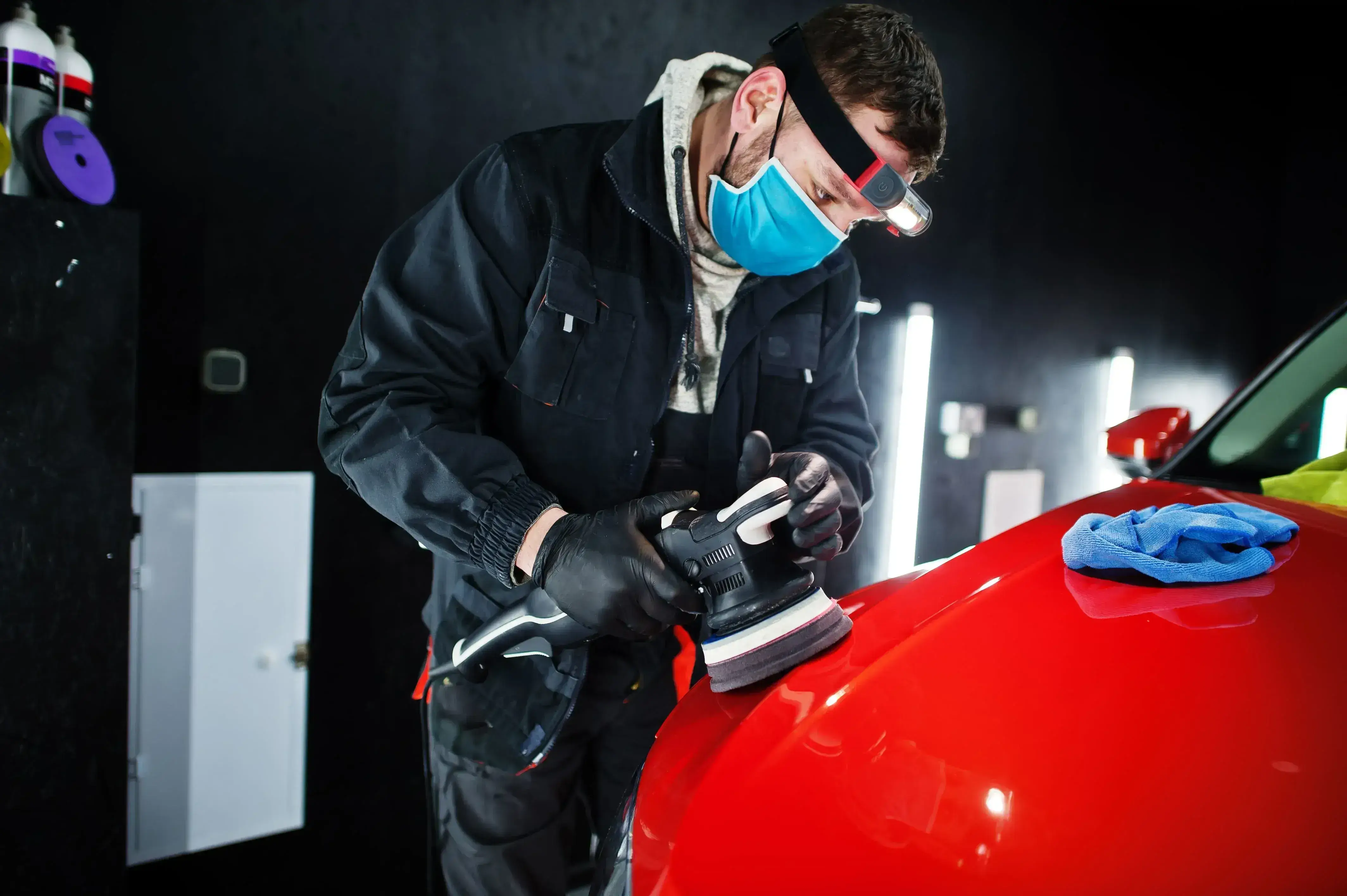
Car polishing can totally change how your car looks, getting rid of scratches, grime from the surface, and minor paint imperfections. while restoring the paint's smoothness and shine. Your car will get its smoothness and shine, making the car look cleaner and more well-maintained.
Many car owners believe that the more they polish their car, the shinier it will become, so they assume polishing at every service is good for their car. However, doing it in moderation is what actually keeps the clear coat lasting a long time.
Understanding when to polish your car is important due to the fact that polishing can remove the clear coat layer. Therefore, you should only do this when necessary in order to keep the clear coat layer intact. Taking care of your car's paint means knowing the right time for polishing and when it is better to leave it alone.
Key Takeaways
- Polishing is a corrective step, not a weekly habit. Polishing only when needed keeps the clear coat intact and helps your paint last longer.
- Polishing is not the same thing as waxing. Polish smooths; wax seals. You need both of these, in that order, not one over the other.
- The frequency of car polishing depends on the use of a vehicle: do it every 1-2 times a year for daily drivers, and every 3-4 months for off-road vehicles.
- An ordinary car can handle only about 4 to 6 full corrections during its lifetime because the thickness of its clear coat is only about 30-50 microns.
- The fingernail test can help you identify whether a scratch needs a simple polish or a professional's help.
Summary
Polishing a car involves the removal of a thin layer of clear coat in order to get rid of scratches and dull areas. It should be done no more than once or twice a year; it is not a method of everyday maintenance. Polishing is for correction, waxing is for protection, and you cannot do it too many times before its factory clear coat runs out.
Polish vs Wax: The Ultimate Paint Care Face Off
People often ask whether car polish or car wax is better; the truth is that there is no competition, as they are both teammates with different jobs.
Polish is used for corrections, while wax is used for protection. One prepares the surface and the other seals it in.
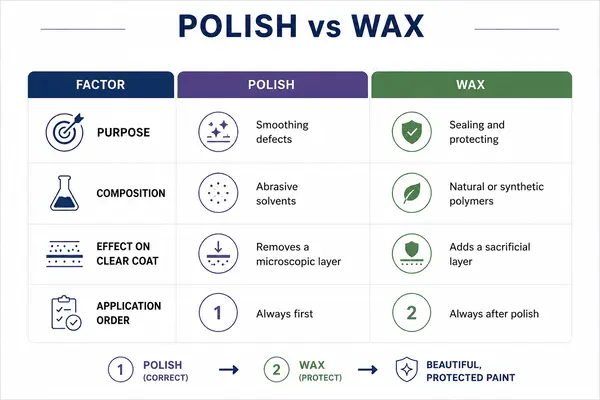
Skipping polish and moving directly to wax simply locks existing scratches beneath a layer of shine. Bypassing wax after polishing leaves fresh, exposed paint unprotected against sun and dirt.
How Often Should You Polish a Car: Ideal Frequency
How often you should polish a car is completely dependent on its environment and use.
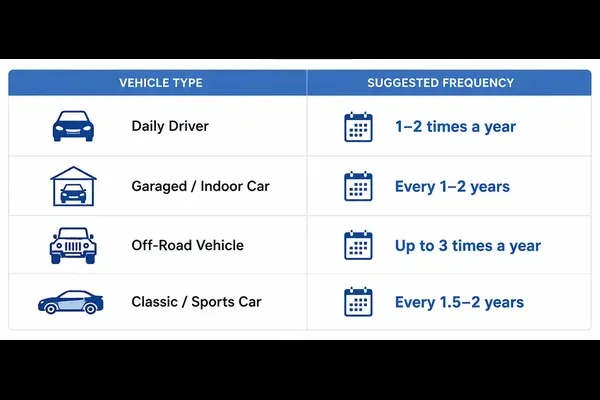
- Daily drivers: Daily-driven cars need polishing 1 to 2 times each year, facing sun, dust, and traffic
- Garaged or indoor cars: Cars in garages or indoors: This need polishing once every one or two years, since less sun exposure means they experience less paint deterioration.
- Off-road vehicles: Should be polished up to 3 times per year, since grit and branches tend to scratch up the surface more
Classic or sports cars: Should be polished every 1.5 to 2 years, balancing that showroom look with keeping your paint in good shape for the long run.
Coastal humidity, salt air, and strong sun all put pressure on paint, which is why the need to polish your car should be considered every season instead of sticking to a fixed date on the calendar.
How Many Times Can a Car Be Polished: The Ultimate Limit
Here is the figure that most car owners know about. An ordinary factory clear coat is typically only around 30 to 50 microns thick, which means it is about as thick as a sticky note.
As per specialists in detailing paint correction at Dr. Beasley's, one round of aggressive compounding or cutting will remove around 2 to 5 microns of that original layer each time.
If you do the maths, the picture becomes clear. Keeping the clear coat above roughly 20 microns is what shields the base coat from UV rays and keeps the paint performing well for the long run. That means the question of how many times a car can be polished throughout its lifetime realistically works out to just 4 to 6 full corrections, best used wisely.
How to Know If Your Paint Actually Needs Polishing
Before you grab a buffer, run these two quick checks first.
The Concentric Circle Test
Shine an LED inspection lamp or stand outside in the direct sunlight and look at the paint closely. If you see fine, web-like scratches radiating in circles, it usually indicates that light scratch treatment is needed.
The Back of Hand Test
Wash the car, and run the back of your hand over the surface gently. If it feels rough and gritty instead of smooth like glass, then the paint needs a clay bar decontamination first, not polish.
How to Polish Out Scratches on a Car: Step-by-Step Scratch Repair
Fixing scratches on your car always starts with one simple test.
The Fingernail Rule
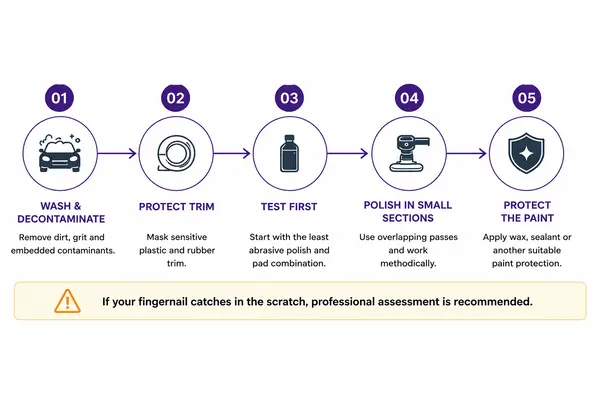
Drag your fingernail lightly across the scratch. If your nail catches in the groove, it is too deep for you to fix at home and will require help from a professional. If your nail slides over smoothly, it's a light scratch, and you can probably fix it yourself.
For scratches that pass the fingernail test, follow this scratch removal polish process:
- Give the car a deep wash and decontaminate with a clay bar to lift out all the stuck-on grit before it drags across the paint.
- Mask any sensitive trim with tape so the polish doesn't leave white stains on nearby plastic.
- Try a small test spot first, and always start with the mildest polish and pad combination.
- Use the cross-hatch technique, with overlapping up-and-down and left-to-right motions across small areas.
- Lock in protection right away. Never leave the bare clear coat exposed; apply wax, sealant, or ceramic immediately.
Want to know more about ceramic protection? Learn what ceramic coating is, how it works, and how long it lasts.
Professional Car Polishing vs DIY: When to Call the Experts
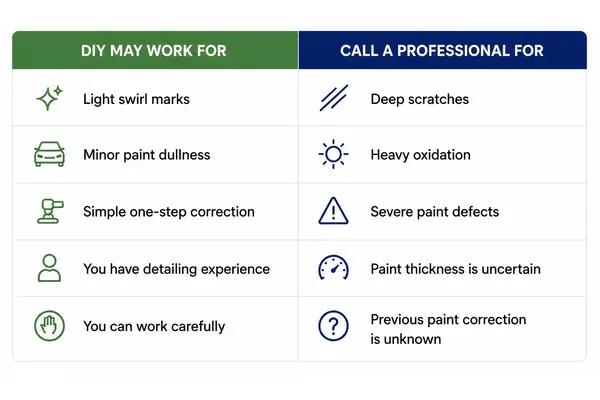
Light swirl marks and easy one-step finish polishes are fine for a confident owner with some time to spare.
Deep key scratches, heavy oxidation, or paint that is already showing thinness on a gauge require professional car polishing instead. This is exactly the type of judgment trained detailers make every day, and it is indeed worthwhile to let them do that for you.
Also Read: What Is Car Detailing and What Services Does It Include?
WOW Car Wash is a car and bike washing service with its centre in Porvorim, plus doorstep visits all across Goa. Our team handles exterior polishing, interior deep cleaning, and ceramic treatments either at the centre or right at your home or office, so you can pick whichever option works best for you.
Polishing Is Only Half the Picture
Car polishing enhances your vehicle's exterior, but the inside also requires cleaning despite how good the outside looks.
The best solution for this is regular deep cleaning of the car, which removes stains, dirt, and odours from the car seats and carpets while protecting the surfaces from damage. If you want to know more about the process, our guide to interior deep cleaning and odour removal covers it in detail.
This combination of exterior polishing with regular interior cleaning allows the car to maintain its fresh look and feel for years. WOW Car Wash provides a complete range of car care services, so you don't have to deal with two separate providers.
Conclusion
When you should polish your car comes down to one rule: only when the paint genuinely needs it, never on a fixed schedule. Know the difference between polish and wax, respect your clear coat's limits, run the fingernail test before reaching for a buffer, and contact the professionals when damage runs deep. That's what keeps your car's shine alive for years.
FAQs
Is it good to polish the car every month?
No, once or twice a year is enough. That keeps the clear coat healthy and your paint protected for the long run.
Does a brand-new car need polishing?
Only a light, gentle finishing polish, just to prepare the surface for ceramic coating.
Is it okay to polish my car under direct sunlight?
No, polish your car in a shaded or indoor place. Sunlight makes the compound dry too fast and can lead to damage to the clear coat.
Why does black paint show "holograms" after polishing?
Black paint shows buffer marks easily. Use extra-soft pads and a gentle technique to avoid them.
How soon after polishing should I apply wax or sealant?
Apply protection the same day. Bare, freshly polished clear coat is open to dust and UV damage overnight.
How Often Should You Clean Your Car Engine: Cleaning Frequency, Safety & Component Care Tips
Introduction
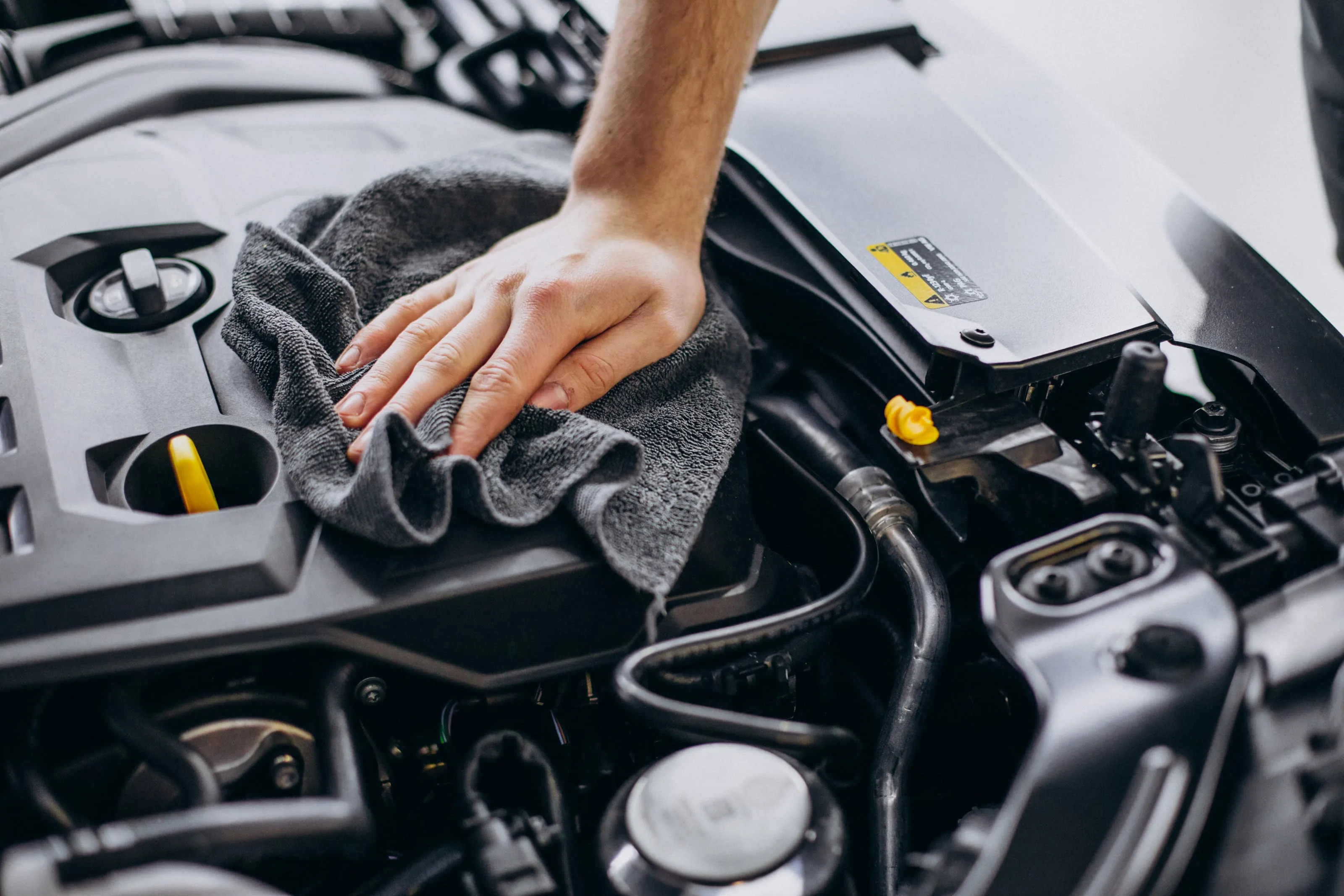
The engine bay of your car is its lifeline! Keeping the engine bay clean can not only improve the appearance of your vehicle but also help you identify problems such as leaks, avoid future overheating, and extend the life of your vehicle as well. Many people are concerned about the safety of having their engine cleaned. However, if done correctly, washing a car engine is safe and genuinely valuable.
Summary
Most car engines should be cleaned every 1 to 2 years, but the use of road salt, dirt, and moisture from monsoons can result in more frequent cleaning being required. For safety purposes, always let the engine cool before cleaning and take extra precautions to protect sensitive electronic devices. Depending on your comfort level, you may choose to perform your own engine cleaning or have a professional complete this service for you.
Key Takeaways
- An engine cleaning should occur once or twice yearly under typical conditions.
- If in a dusty or coastal location, the engine may need to be cleaned every 2 to 3 months.
- Typically, your throttle body needs to be cleaned every 30,000 to 50,000 miles.
- Make sure to wait 30 to 45 minutes after shutting off the engine before doing any cleaning.
- Before you rinse, be sure to protect your battery, alternator, and sensors.
How Often Should You Clean Your Car's Engine?
For most drivers, once or twice a year is the sweet spot. But your environment changes everything.
Your Environment, Your Schedule
- City or urban driving requires an annual cleanout and periodic dust & exhaust washes;
- Arid/Dry Regions require cleaning with three-month intervals, as they collect dust much quicker and can block working components.
- Coastal/Monsoon Areas like Goa require much cleaner surfaces every two to three months because of their exposure to salt air and moisture.
Understanding how often you should clean your engine based on where you live saves you from expensive surprises.
Also Read: Looking after your engine is just one part of vehicle maintenance. Learn how regular car detailing protects your car inside and out.
Component-Specific Cleaning: Throttle Body & Turbo
How Often Should You Clean Your Throttle Body?
The typical recommendation is to replace them every 30,000–50,000 miles. If you notice that your vehicle has a rough idle, sluggish acceleration, or poor fuel economy, then don't ignore them.
How Often Should You Clean Your Turbo?
Keeping your vehicle clean externally is important to reduce heat buildup; however, it will not necessarily help you if your vehicle has carbon buildup on the turbine blades. Typically, you should clean turbine blades every 40,000–60,000 miles as part of basic turbo maintenance. No exceptions! They must be done as part of the regular maintenance of turbo vehicles.
Safety Protocol Before a Car Engine Wash
The Golden Rule: Never clean a hot engine. Let it cool for at least 30–45 minutes.
Before you begin:
- Cover the alternator, the fuse box, the sensors, and the air intake using plastic material.
- When washing parts, use low pressure only (as using high pressure could damage seals and connectors) for washing.
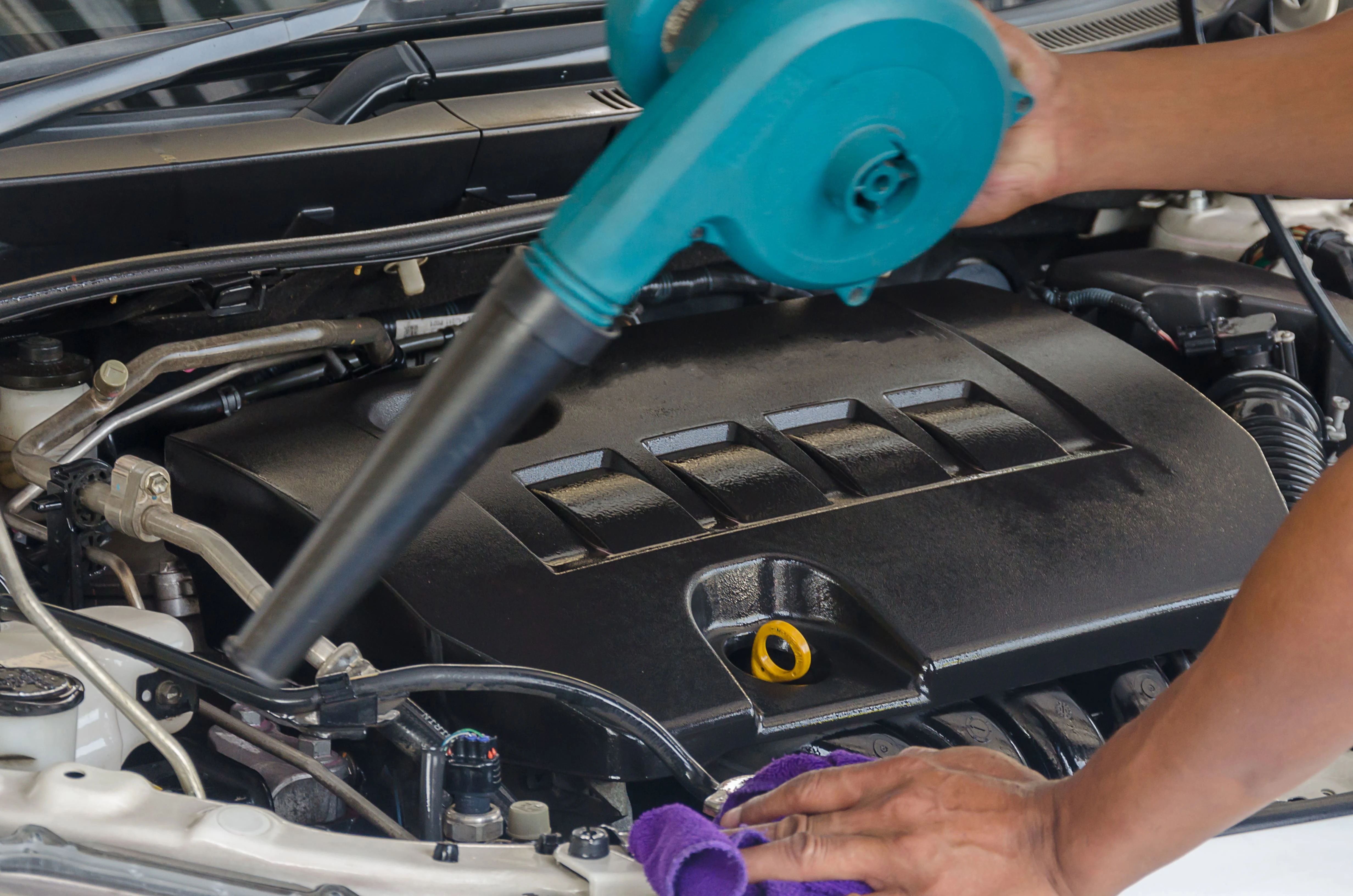
- Dry using compressed air or using a microfiber cloth, then run the engine briefly
Done right, is engine cleaning safe? Absolutely - preparation is everything.
Professional Engine Cleaning vs. DIY
When to Go Professional
If you are nervous about working on your vehicle because of tight spaces, stubborn grease, or sensitive components, then it's time to get professional help! A car engine wash service like WOW Car Wash uses professional-grade steam cleaning equipment to professionally and thoroughly wash your vehicle's engine without the risk of water damaging your vehicle or taking any chances.
The DIY Super Clean (5 Steps)
- Step 1: Debris Removal - Remove the debris (such as leaves) along with any loose dirt by hand.
- Step 2: Degreasing - Apply engine degreaser; soak for 5-10 minutes.
- Step 3: Agitation - Use a detailing brush to agitate the crevices in the engine.
- Step 4: Rinsing - Use a low-pressure rinse to rinse.
- Step 5: Drying - Air-dry the engine after rinsing, and then briefly run the engine.
Also Read: Want to protect your car's exterior after engine cleaning? Discover the benefits, lifespan, and protection offered by ceramic coating for cars.
Conclusion
For the long-term health of your vehicle, it is essential to know how often you should clean your car's engine and how to do so safely. Regardless of whether you take a cautious do-it-yourself route or go with a professional engine cleaning service, consistency is what is most important.
If you require professional assistance in the cleaning of your car's engine, WOW Car Wash provides top-quality services right at your doorstep. You will not have to deal with long waits or travel time - simply a cleaner, healthier car at your home or office.
Also Read: Don't stop at the engine bay- discover how professional interior cleaning keeps your car's cabin fresh, hygienic, and well-maintained.
FAQs
Is washing a car engine at home safe?
Yes, provided that care is exercised when doing so. Be mindful not to apply high-pressure water to sensitive electrical components, electrical sensors, battery terminals, and air intake systems.
Is vehicle performance improved through engine cleaning?
A clean engine bay allows you to notice oil leaks, worn belts, and cracked hoses sooner and maintain better vehicle operation, resulting in better engine performance overall.
What are the signs that an engine needs to be cleaned?
Dirty engines give off many warning signs, such as oil leaking from under the hood, the exhaust system smelling, large amounts of dust settling onto the engine, and/or overheating.
Is it necessary to wash your car engine more frequently during monsoon and/or winter months?
Yes, because of occurrences like moisture, mud, and salt accumulation on the surface of engines during these seasons, as well as when driving along coastal routes, more frequent washing is advisable.
What components/parts should be covered when cleaning the car engine
While cleaning the car engine, be sure to cover or carefully clean the following components to avoid water damage: battery, alternator, fuse box, exposed wires, sensors, and the area around the air filter.
What Is Ceramic Coating for Cars: Benefits, Longevity, Pros & Cons Explained
Introduction
Traditional wax loses its effect after a few weeks. Extreme weather (very high sunlight exposure, monsoon rains, and coastal air) demands something stronger - that's where a ceramic coating for cars is a good solution, with a mirror finish that lasts several years.
Key Takeaways
- A ceramic coating is a liquid polymer that forms a tough, glass-like protective layer on top of your vehicle’s paint.
- Ceramic coatings provide UV protection and resistance to chemicals, and they create an outstanding water-beading effect on your vehicle.
- With proper maintenance, ceramic coatings have a lifespan of between 2 and 5 years.
- Professionally applying a coating will typically yield better durability than doing it yourself.
- Ceramic coatings provide the best “insurance” for your vehicle’s original factory paint.
Summary
Ceramic coating is a liquid polymer that is adhered to the surface of your car's paint via molecular bonding to create a hard, glass-like shield. The benefits of ceramic coatings include UV protection and chemical resistance, water beading, and enhanced gloss for 2 to 5 years. This article provides information about ceramic coating benefits, pros and cons, lifespan, and whether you should apply through professional services or do it yourself.
What Is Ceramic Coating for Cars?
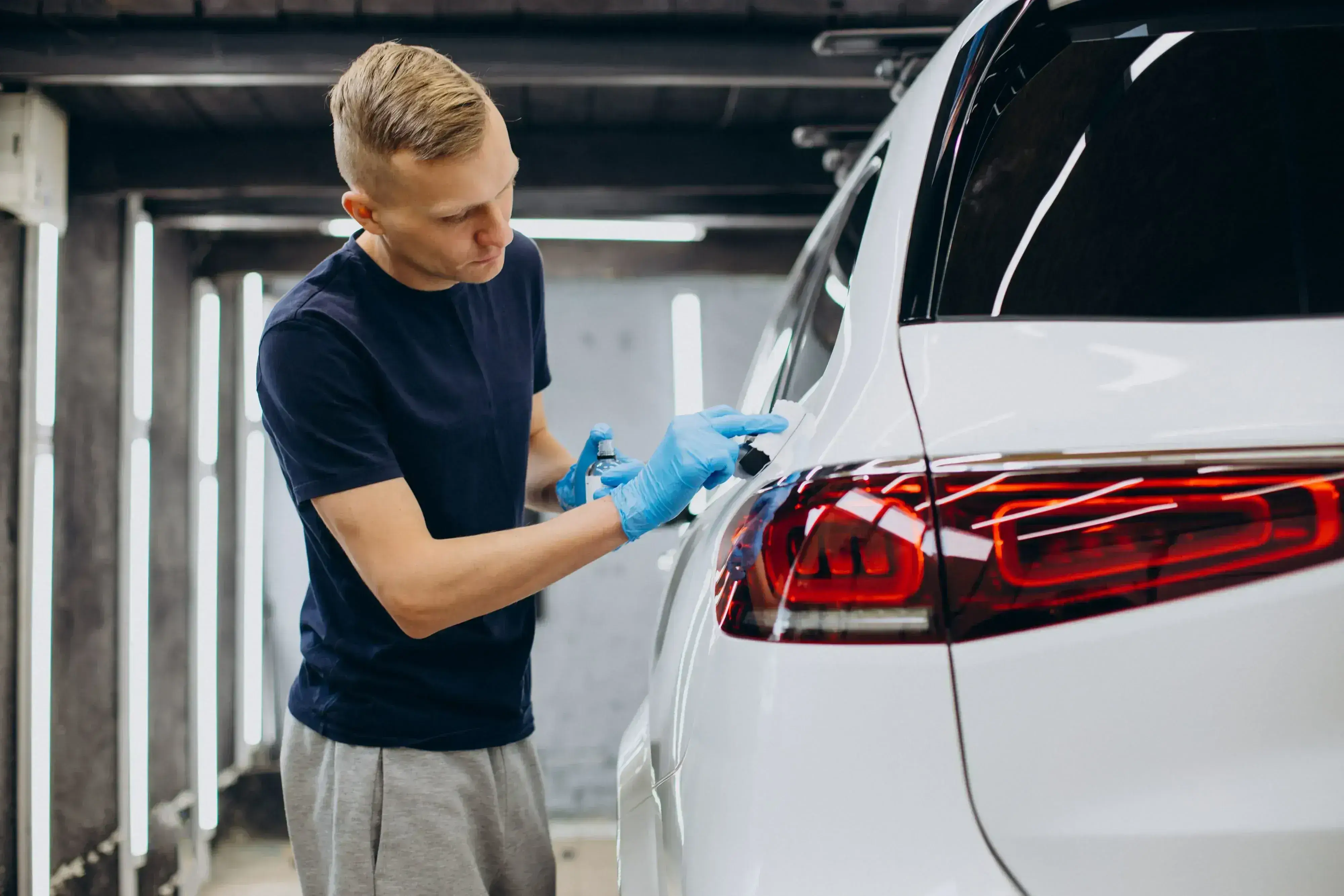
Ceramic coating is essentially a liquid polymer containing SiO2 bonded chemically to your vehicle's paint surface. When the solvent evaporates from the liquid polymer, it forms a hard, clear, 'glass-like' layer by crystallising over your factory paint. Therefore, a ceramic coating provides exceptional hydrophobic (repelling water) protection against the elements, making it easy to keep clean with minimal effort.
Want to know how ceramic coating fits into a full car care routine? Learn what car detailing includes, its benefits, and how often you should do it.
Ceramic Coating Benefits for Car Owners
UV and Oxidation Protection
The extreme heat of the sun in Goa can discolour paint on your car after a while. Ceramic coating benefits for car owners are its UV-resistant protection, helping to prevent oxidation and retain colour richness.
Chemical Resistance
Acid rain and bird droppings are silent killers of paint on cars. How does ceramic coating protect your car here? It's a protective barrier against chemicals that cause etching of the paint surface that regular wax cannot provide.
The Water Beading Effect
The sight of the water's beading effect is visually pleasing. Water beads and falls off a surface, taking the dirt with it as well. It makes cleaning your car an easy task.
Enhanced Gloss and Long-Term Value
The shine of a ceramic coating can be equal to that found in a showroom. In the long run, a ceramic coating helps preserve the resale value of your vehicle by keeping the paint in excellent condition year in and year out.
How Long Does Ceramic Coating Last?
A ceramic coating will normally last somewhere from two to five years, depending on the quality, preparation for application and the technique used to apply it, as well as how it was maintained (using a neutral pH shampoo and correctly washing your vehicle) and lots of other factors, including how much exposure the coating was subjected to.
Pros and Cons of Ceramic Coating
The pros and cons of ceramic coating are straightforward.
The advantages of ceramic coatings include their durability, ease of maintenance, and beautiful finish.
The disadvantages of ceramic coatings include their initial expense, the application time required, and the need to have all imperfections in the paint corrected before application because the ceramic coating will permanently seal in those imperfections.
Is Ceramic Coating Worth It for a New Car?
Yes! Applying ceramic coating to factory paint immediately is the best choice you can make. It will lock in that fresh-off-the-lot finish and protect resale value immediately.
Professional Ceramic Coating vs. DIY Kits
DIY ceramic coatings for cars are generally less expensive than professional products, but they come with their own risks - high spots and streaks are common if you do not have prior experience.
All professional applications require paint correction (to make your vehicle look its best) and infrared curing (to ensure you have a perfect, long-lasting spray bond).
WOW Car Wash provides professional car care services, including ceramic coating applied by professionals in the comfort of your home or office anywhere throughout Porvorim, Panjim, Calangute and Mapusa - no queues and no hassle.
How to Maintain Your Coating
To maintain a ceramic coat, wash it using the two-bucket wash method and a pH-neutral shampoo; do not wash the vehicle at an automatic wash that uses abrasive brushes, as they will harm the hydrophobic nature of the coating over time.
Conclusion
Investing in ceramic coatings for your car makes sense over time because it builds upon both the enjoyment and protection that your car provides. You will see great results when applying ceramic coating to new vehicles or for helping restore older vehicles. Book your ceramic coating at WOW Car Wash - Goa's trusted doorstep car care specialists.
Also Read: Explore our Car Interior Cleaning Guide for deep cleaning tips, odour removal, and the best methods to use.
Frequently Asked Questions
Is a ceramic coating effective at protecting car paint?
Yes, ceramic coatings safeguard your vehicle's finish from UV radiation, chemicals, and minor surface abrasions, as well as creating a hydrophobic layer of surface protection.
What is the average lifespan of ceramic coatings on cars?
Ceramic coatings typically last between two and five years, depending on how well they were prepared and how well they are maintained.
Is ceramic coating superior to wax/sealant coatings?
When comparing ceramic coatings vs sealants, you will nearly always find that the ceramic coating wins out on durability, hardness, and longevity.
Should you use ceramic coatings on new vehicles?
Yes, absolutely, for protecting your factory paint from the day you purchase the vehicle!
Can a ceramic coating help protect against scratches?
Ceramic coatings resist light swirl marks; however, they are not scratch-resistant. The protective properties of the ceramic coating are best preserved and extended through proper maintenance.
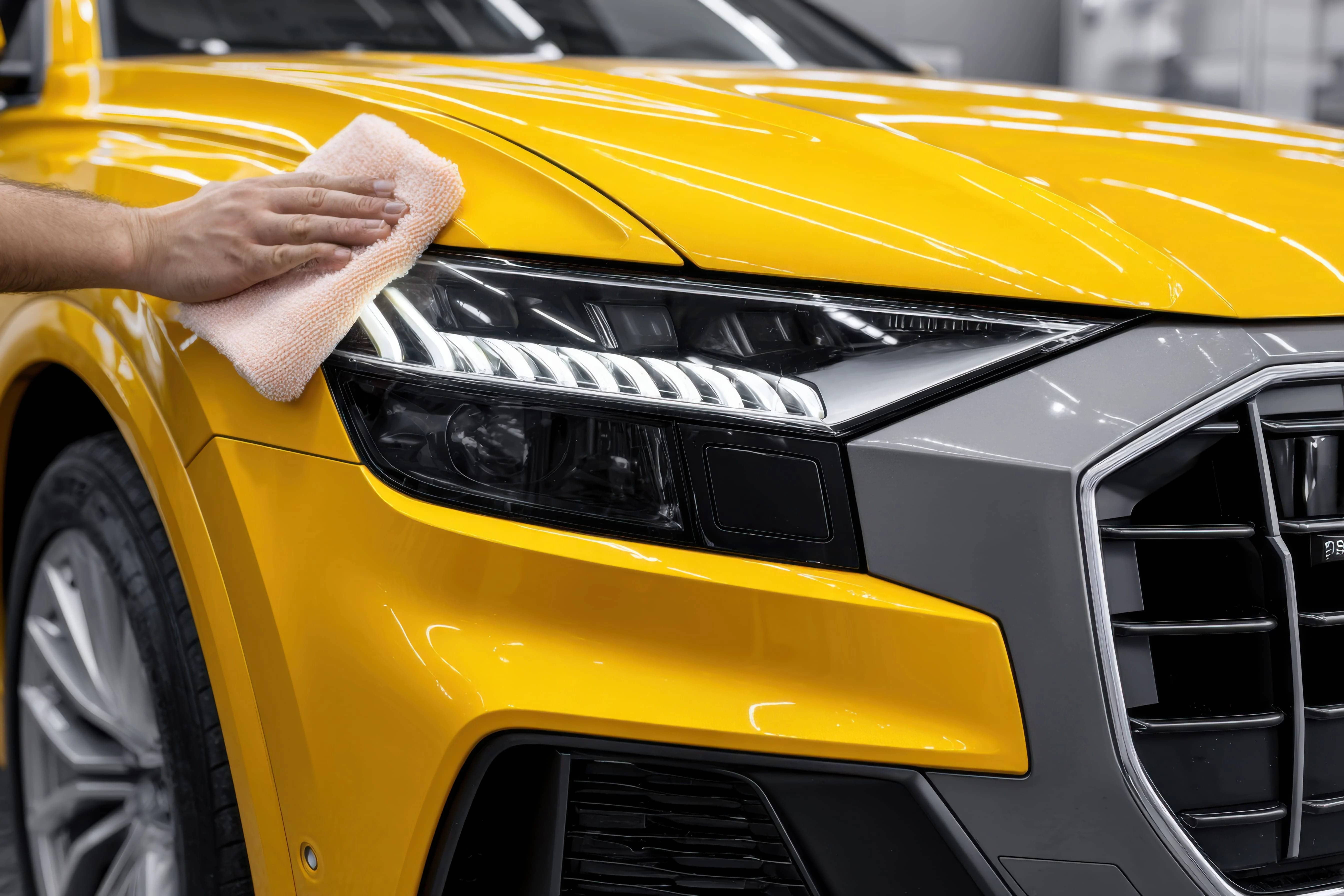
What Is Car Detailing: Services Included, Benefits & How Often You Should Do It
Introduction
While you may think of your car mainly as a way to get around, it is actually a major investment that deserves protection from damage. Dust, sun exposure, and everyday use slowly deteriorate both the aesthetic and the value of your vehicle. Car detailing is how you can maintain or restore the appearance of your vehicle to as close to a brand-new state. Car detailing is a professional service that provides an extensive cleaning and reconditioning of your vehicle - both exterior and interior.
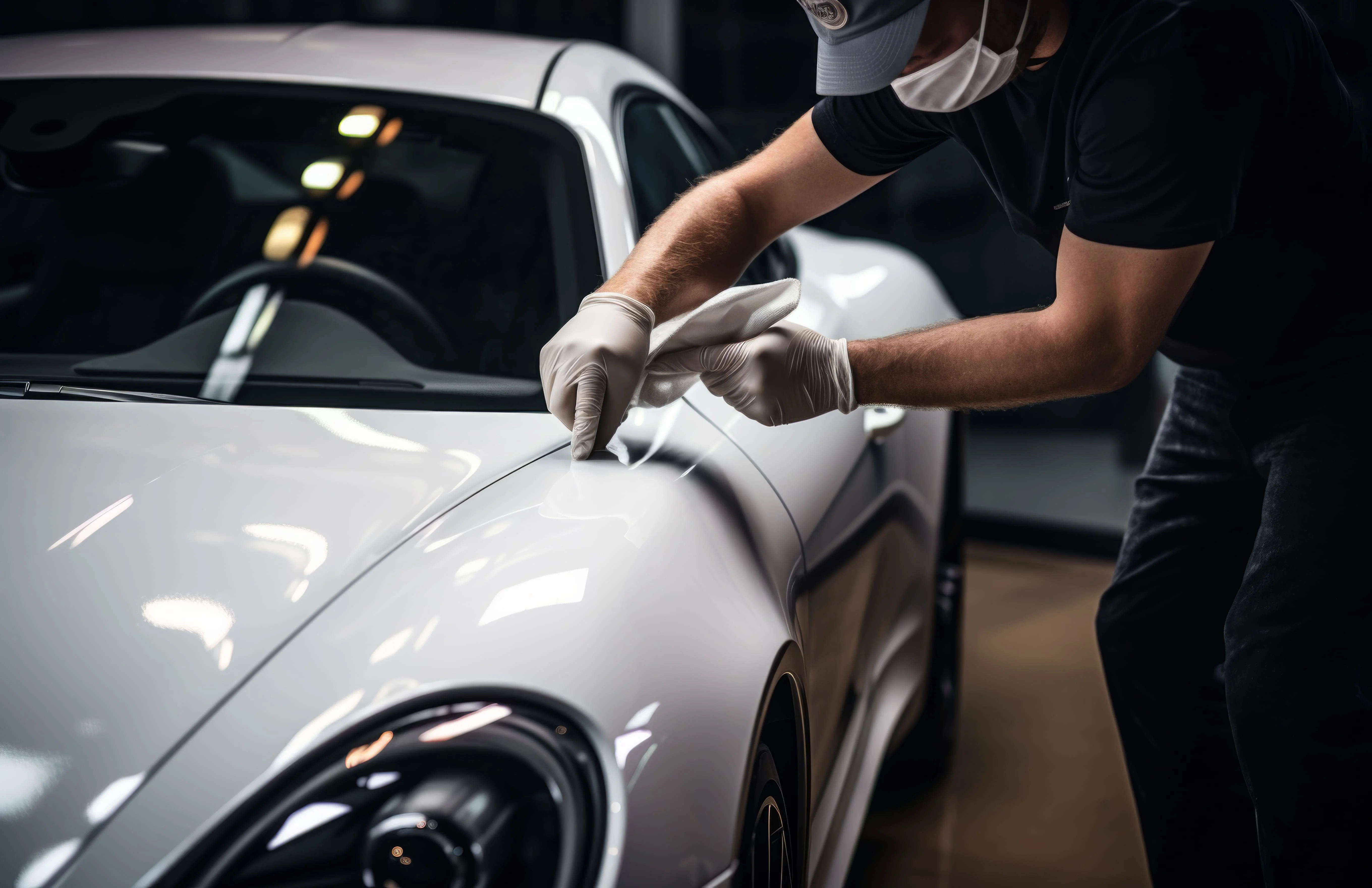
Key Takeaways
- Car detailing is an extensive cleaning and refinement operation, not simply a wash.
- It consists of polishing the exterior, removing impurities from the paint, deep-cleaning the interior, and applying a protective coating.
- Having the vehicle professionally detailed every 4 to 6 months will help to preserve the resale value of the vehicle and protect it from environmental damage.
- A professional detailing will be able to provide superior results compared to doing it yourself.
Summary
The process of car detailing is more than just washing your car; it is a professional cleaning and restoration of your vehicle's exterior and interior. A detailed cleaning of the entire surface of the vehicle includes things like polishing, paint decontamination, steam cleaning, and applying protective coatings to your car's exterior. It is important to have your vehicle detailed every 4–6 months to preserve resale value and keep the showroom appearance intact.
What Does Car Detailing Include?
1: Exterior Car Detailing
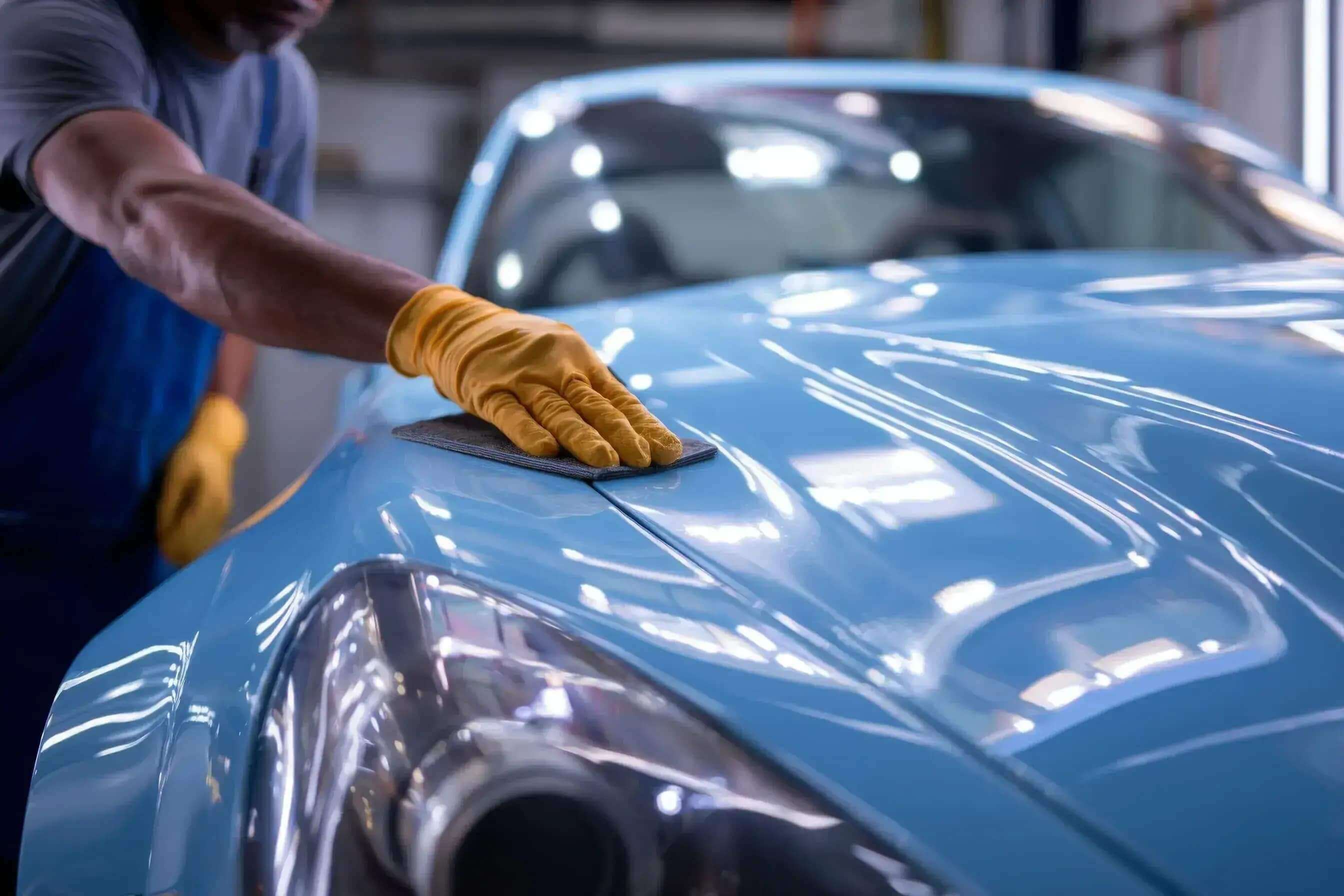
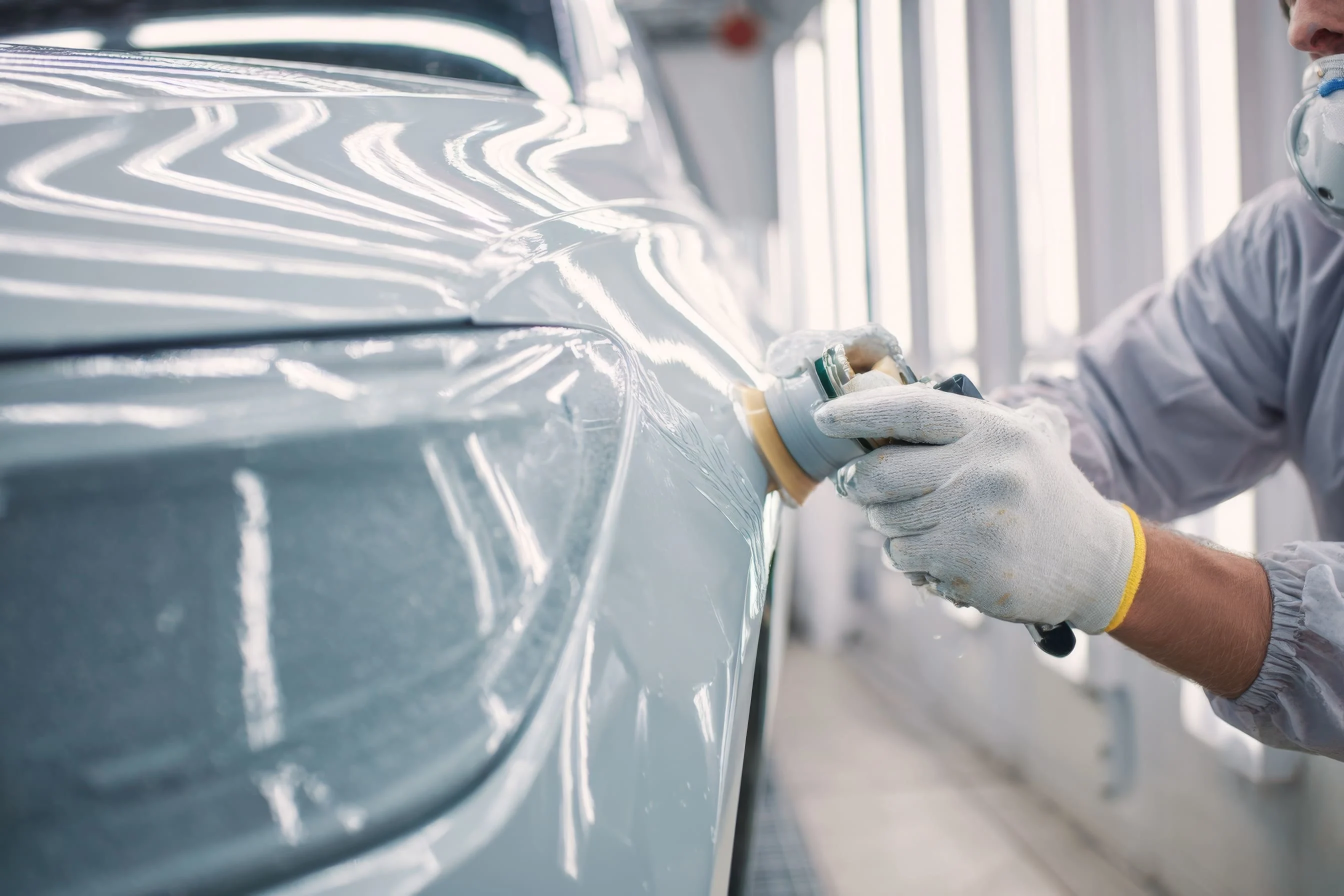
The services for exterior auto detailing start with a full wash and then decontamination of the surface using a clay bar to remove embedded dirt and grit from the surface. Next, you will remove any swirls in the paint through careful polishing and protect the paint with a wax, sealant, or ceramic coating.
2: Interior Vehicle Detailing
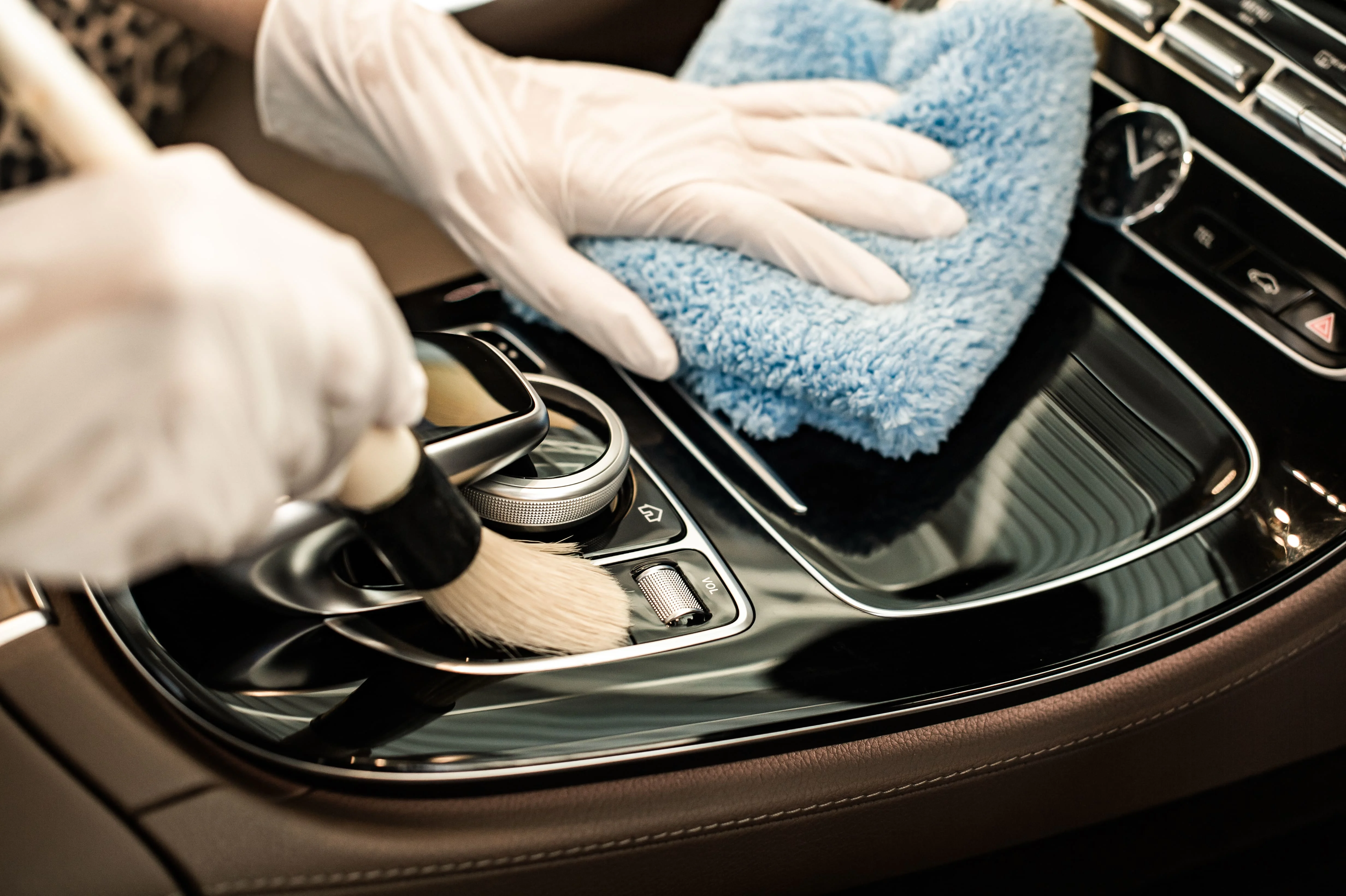
Technicians perform several different tasks, including using a deep vacuum to clean carpets, steam cleaning the upholstery of the vehicle, conditioning leather to prevent it from cracking, and then sanitising all surfaces to remove odours. The result is that the inside of the vehicle will have a real feeling of freshness.
Struggling with lingering odours in your vehicle? Learn how to remove bad smells from your car interior with our step-by-step guide.
3: Specialist Add-Ons
Additional services consist of reconditioning of the engine bay, headlight refurbishment and application of water-resistant coatings to the glass, which will add value over time.
The Ultimate Car Detailing Checklist
After receiving a professional detailing service, use the checklist below:
- Wheels and Tires - Cleaned, dressed, and free of brake dust
- Paint Prep - Clay Bar treatment completed with no contaminants present
- Paint Correction - Swirl marks removed and clarity restored
- Protection - Wax, sealant or coating is evenly applied, and the surface has been properly prepped
- Interior Deep Clean - Vacuumed, steam cleaned and sanitised
- Final Inspection - Streak-free glass, polished trim, no odour.
Benefits of Car Detailing
The benefits of car detailing go well beyond aesthetics.
Having a vehicle detailed regularly maintains its resale value and provides an advantage for future sellers by not allowing buyers to have the same negotiating power.
There are many ways to protect your vehicle, such as using a protective coating, which protects against UV rays, bird drops, and rust. Cleaning your car on a regular basis reduces allergens in the cab and improves your ability to see while you drive.
Want to discover expert techniques for maintaining a clean and healthy cabin? Explore our Car Interior Cleaning Guide for deep cleaning tips and the best methods to use.
How Often Should You Detail Your Car?
It is recommended that if you use your vehicle every day, you can expect it to be detailed once every four to six months on average.
Immediate application of ceramic protection to new vehicles provides great results. If you have driven in bad weather, like monsoons, or gone off-road, you should always detail your car afterwards. Always detail your vehicle before selling it.
Is Car Detailing Worth It?
Certainly, when you contrast the relatively low cost of having your vehicle detailed to the extremely high cost of having to repaint or reupholster it, you can see that the money spent for detailing is money saved.
Industry-standard professional tools (i.e., orbital polishers), as well as commercial-quality products, will always produce consistent results that cannot be achieved with do-it-yourself methods.
Choosing the Right Professional
Check verified reviews, particularly regarding pH Neutral, Eco-Friendly Products, as trust is at least as important as technique.
WOW Car Wash is a premium doorstep car wash service in Goa, delivering professional car cleaning at your home or office - without the hassle of queues or waiting times. They come directly to you with the best quality service available (from your basic wash all the way up to high-end ceramic and graphene), and they do it all conveniently.
Conclusion
Car detailing isn't just a luxury but rather a necessity. It backs up your investment against damage, it helps make driving safer, and it helps you to continue enjoying driving in general. Book your next detail with WOW Car Wash and experience the difference a truly clean car makes.
FAQs
What is included in car detailing?
Car detailing includes items such as washing, polishing, waxing, interior cleaning and vacuuming, plus applying protective treatments for each item mentioned above.
How often should I get my car detailed?
It is mostly recommended to detail your vehicle every four to six months.
What are the benefits of Car Detailing?
The benefits of car detailing include the improved appearance of your vehicle, the protection of various surfaces from scratches, damage, etc., and maintaining the resale value of your vehicle.
What is the difference Between Car Washing and Detailing?
Washing your car just cleans it, while detailing goes much deeper with cleaning and restoring.
How long does it take to get your car detailed?
Car detail takes 2-6 hours, depending on the level of service you choose.

How to Remove Bad Smell from Car Interior: Odour Removal, Interior Cleaning & Deep Cleaning Tips
Introduction
A bad odour in the car doesn't go away with an air freshener. Food spill, monsoon moisture, and sweaty upholstery each foster bacteria, which grow deep in your car's interior. To properly deodorize an automobile interior, you will need a true method, not just something that you spray onto it.

Key Takeaways
- Odour in a vehicle generally originates from bacteria, mould, food particles, or the air conditioning unit rather than dirt.
- To thoroughly clean a vehicle's interior correctly, you must vacuum, shampoo, and neutralize odours.
- Baking soda, steam cleaning, and activated charcoal are the top three methods to treat vehicle odours effectively.
- AC ducts should also frequently be cleaned as they can produce hidden musty odours.
- If you have a smell caused by mould, smoke, and/or rodents, contact a professional immediately.
Summary
The methods for eliminating an unpleasant odour from inside your vehicle include identifying the source of the odour, deep cleaning with vacuums, shampooing carpets with enzymatic cleaners or with hot water, cleaning all of the air vents in the car, using baking soda to absorb odours, or using steam to neutralize them. This article will give step-by-step instructions on how to clean the interior of your vehicle, including how to dust the dashboard, tips for DIY cleaning, and when you need to hire a professional.
Is That Smell Dangerous? Identifying the Source
Before cleaning, identify the odour.
- Musty means mould or damp mats.
- Sour means food or sweat.
- Burning or petrol smells signal mechanical issues - visit a mechanic immediately.
For organic smells, learning how to remove odour from car interiors starts with finding the source.
How to Deep Clean a Car Interior
To deep clean a car's interior, you can do this in three steps:
Step 1 - Purge: All personal items, all floor mats, and all trash will be removed.
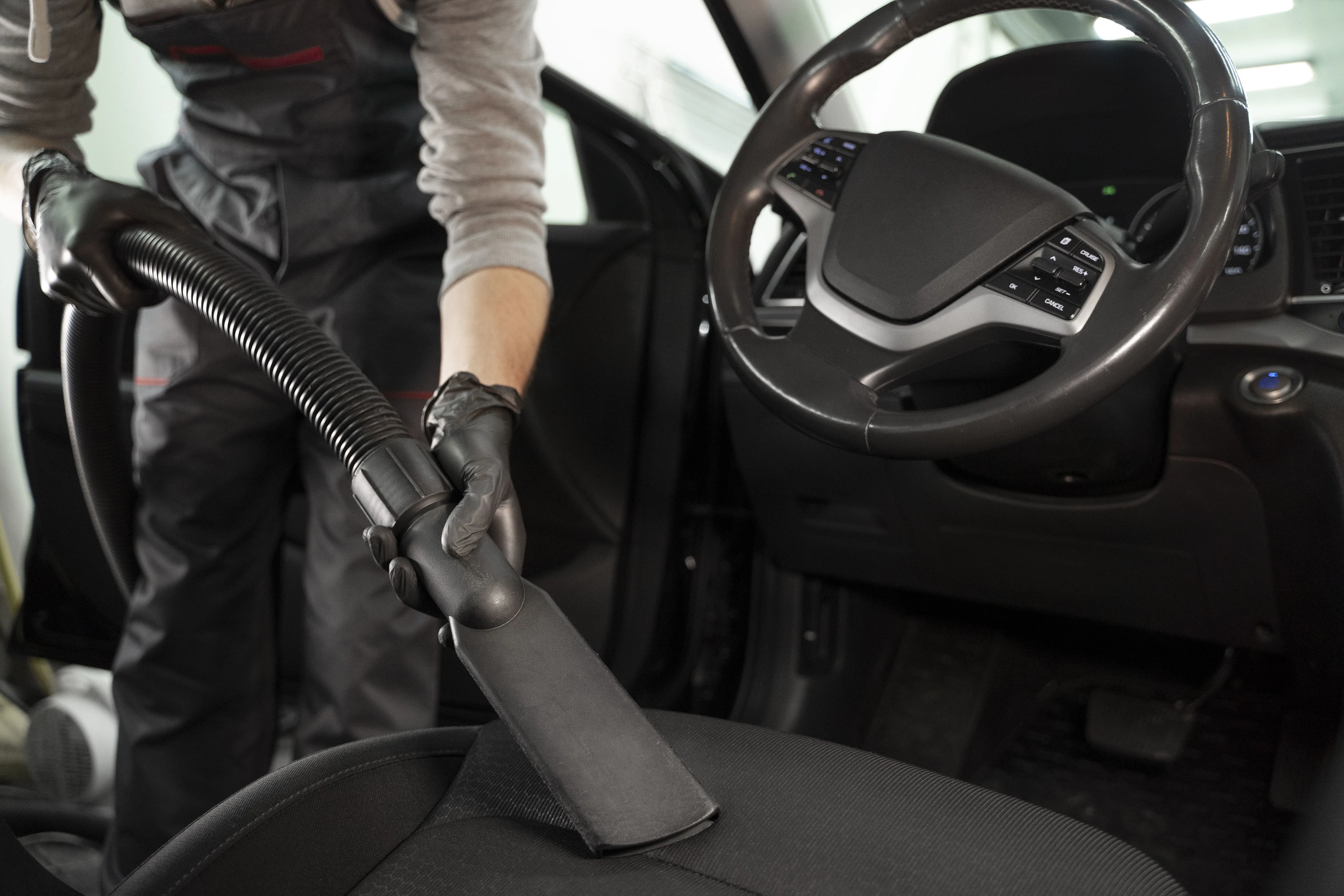
Step 2 - Deep vacuum: Available to pick up debris from below seats and in seat crevices, as well as in the boot (trunk) corners
Step 3 - Shampoo: Use enzyme-based cleaners on carpets or fabric upholstery (not leather) to help remove any organic stain.
If you follow these car interior cleaning tips, you will be sure to eliminate any lingering odour.
Looking for a complete interior maintenance routine? Read our Car Interior Cleaning Guide for deep cleaning tips, odour removal, and the best methods to use.
How to Remove Dust from Car Dashboard and Vents
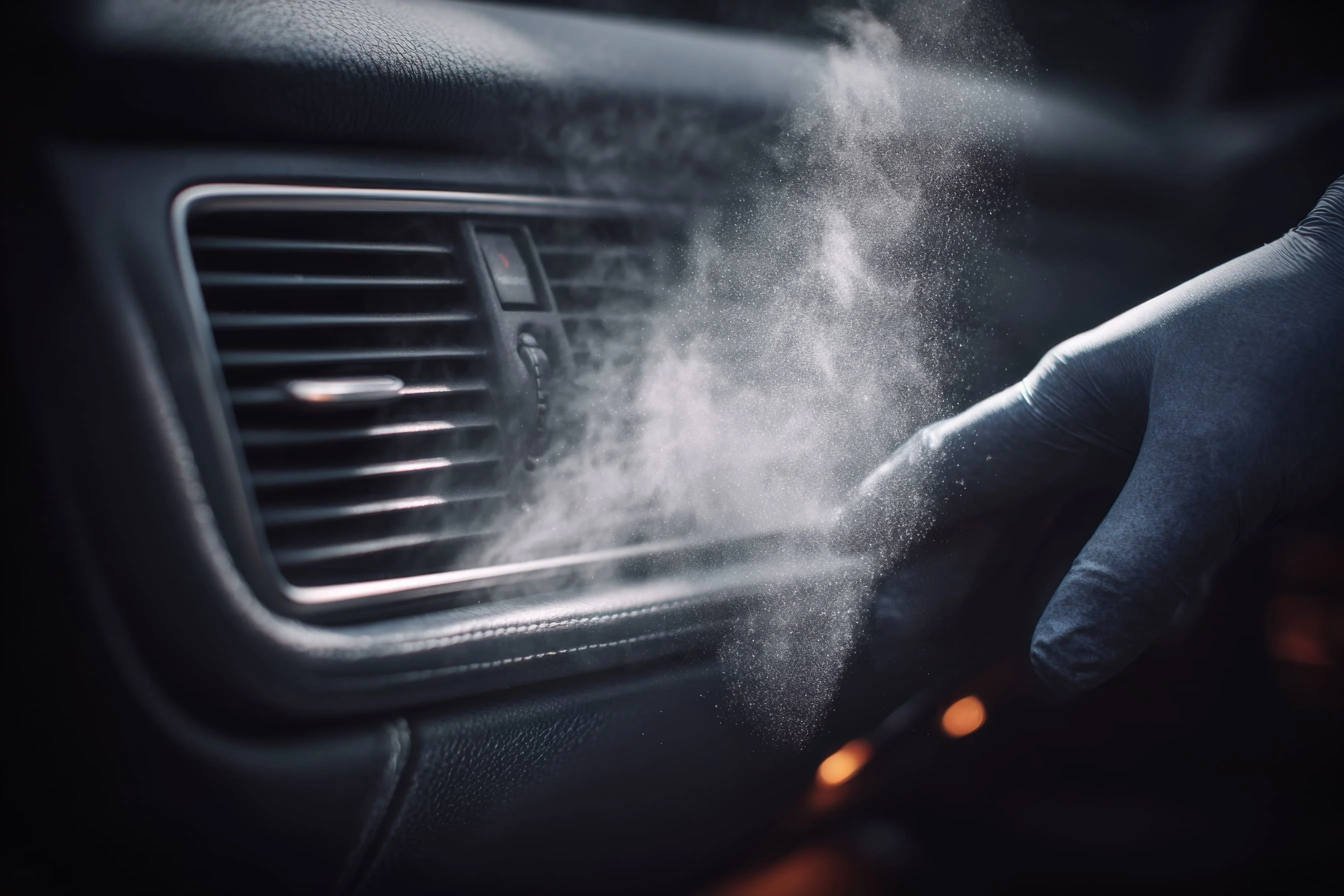
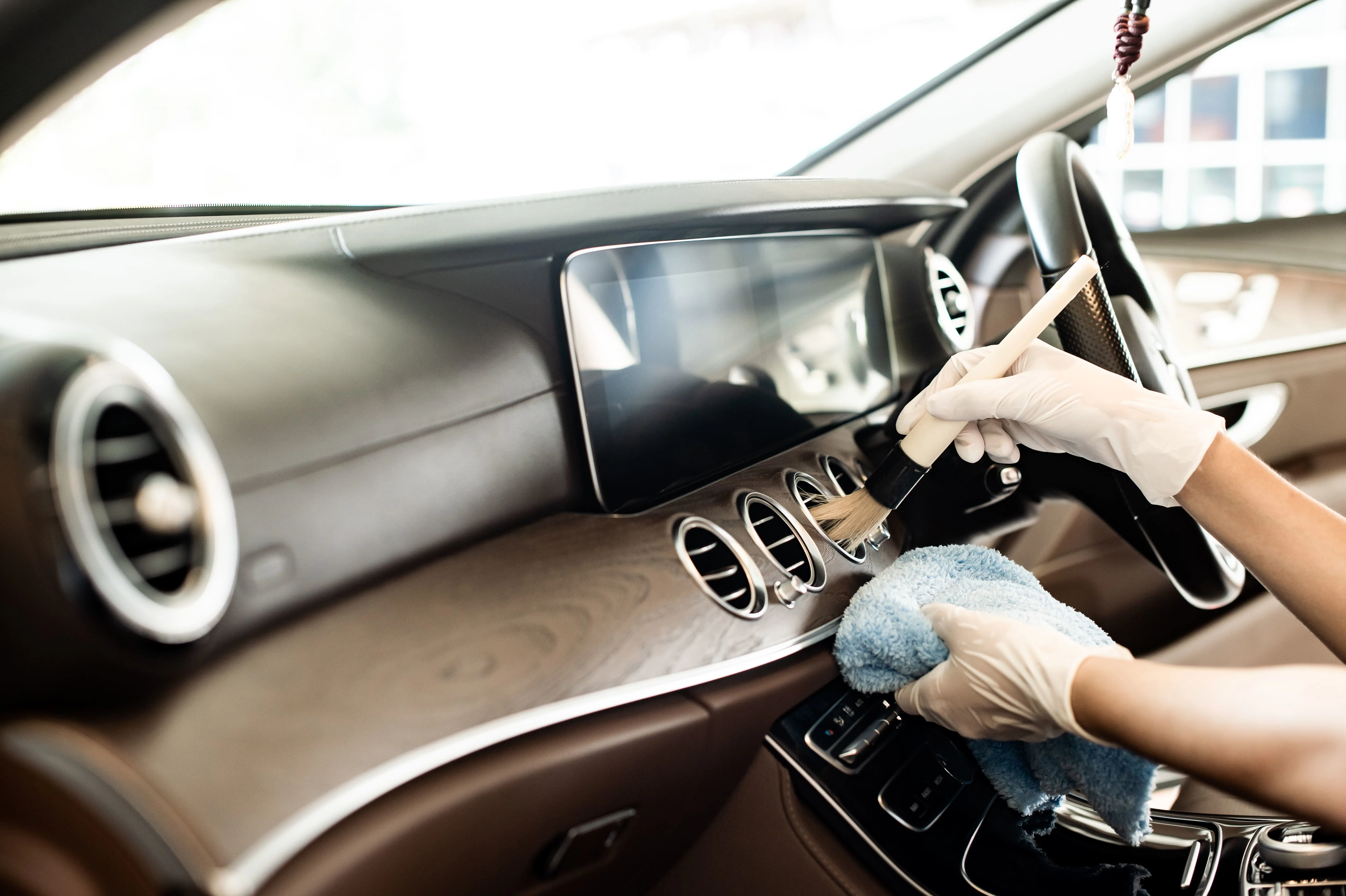
To clean the dashboard of your vehicle, start with the dry brush method in crevices, then use a microfibre towel and pH-neutral cleaner to wipe down all surfaces, and finish by using compressed air to clear out your air vents. Cleaning the air vents will reduce the amount of stale odour that gets returned to the cabin every time you use them, and it is an easy way to refresh your car cabin.
How to Super Clean Your Car Interior
For deep-set smells in the interior of your car, a thorough cleaning will be needed beyond vacuuming.
1. Sprinkling baking soda on your seats overnight will naturally absorb odours
2. Ozone treatment works especially well on smoke and pet odours. Make sure to ventilate your car fully following treatment.
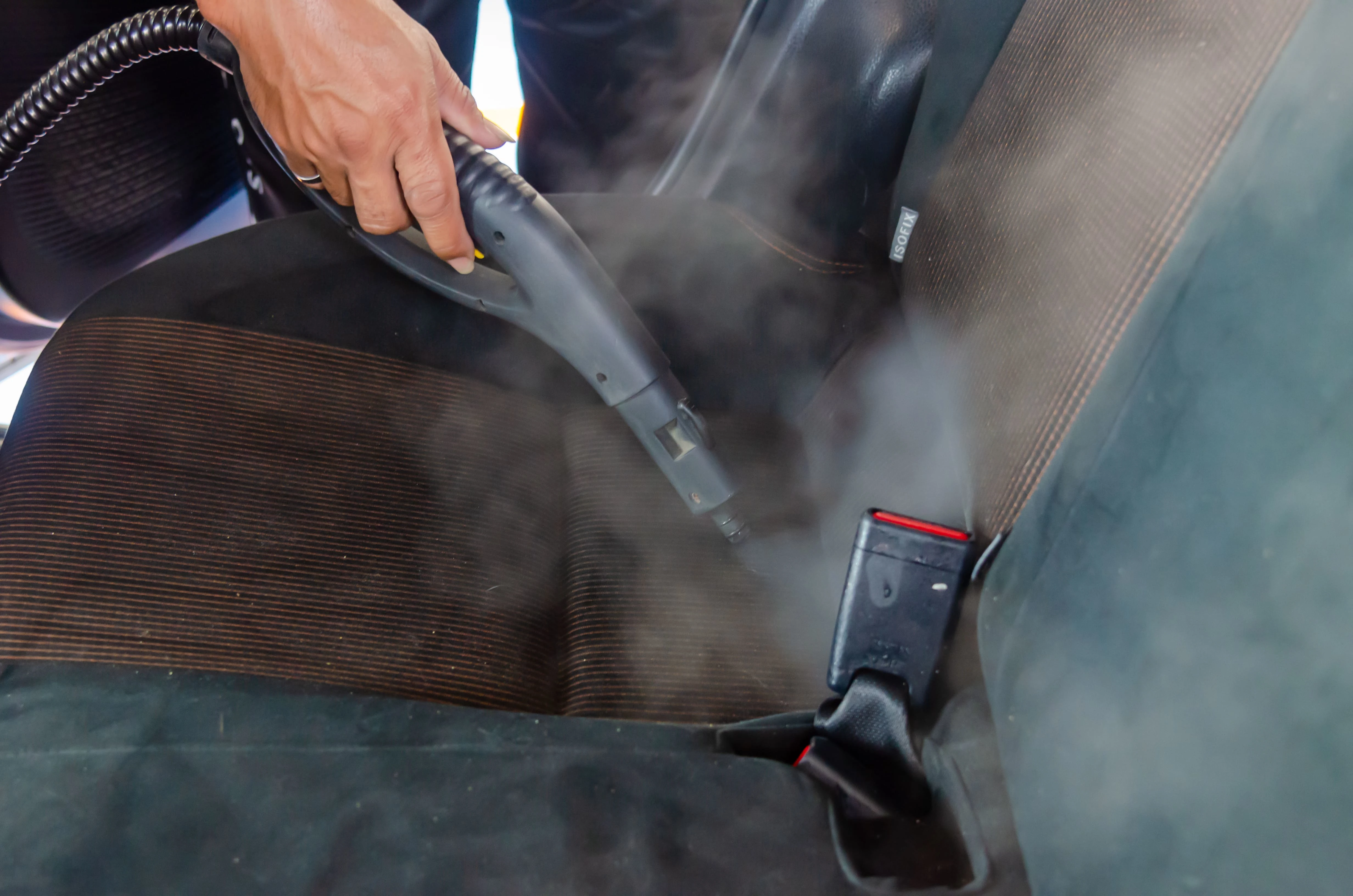
3. You can steam clean and sterilize your car without the use of toxic chemicals, and this is the gold standard for car odour treatment.
Discover how professional detailing goes beyond basic cleaning - explore our Complete Car Detailing Guide.
Natural DIY Hacks to Freshen a Car Interior
Affordable car interior cleaning tricks that really work: white vinegar to clean surfaces, utilize activated charcoal bags underneath your seats, use coffee grounds overnight, or put a couple of drops of essential oil on a cotton ball in the air vent to freshen the car.
Professional Interior Cleaning: When to Call the Experts
Professional interior cleaning is necessary when mould grows, rodents infest, or smoke has been around for a long time. WOW Car Wash in Goa provides doorstep deep interior cleaning across Porvorim, Panjim, Calangute, and Mapusa - no tension of queues, and no hassle. WOW Car Wash is a premium car care services provider that brings professional interior cleaning, odour removal, and detailing services directly to your home or office.
Maintenance & Prevention Checklist
Weekly: Vacuum the floors, wipe down the dashboard, and remove trash.
Monthly: Shampoo the mats, clean the A/C vents, and look for moisture issues.
Quarterly: Follow the full How to deep clean car interior treatment section above
Conclusion
A new and tidy cabin is not a luxury, but a basic care you provide to your car. If you follow proper car interior cleaning techniques and are consistent with your efforts, you can permanently remove all bad odours from the inside of your car.
FAQs
What are the causes of bad smells in a car?
Some of the causes of bad smells include spills from food or drink, wet carpets, mould, sweat, and dirty AC vents.
What are some ways to quickly remove bad odour from my car?
Vacuum thoroughly, put a coating of baking soda on the seats overnight, and clean the air conditioning system. Using steam cleaning will produce fast results.
Which home remedies work best at eliminating odour from cars?
Home remedies such as activated charcoal, white vinegar, and baking soda are all options to freshen a car's interior.
Can AC vents make the car smell bad?
Yes. Dust and moisture can be trapped in the vents, leading to a buildup of bacteria. Regularly cleaning vents with compressed air will help prevent the circulation of musty odours.
Can baking soda remove bad smells in a car?
Yes, it can! Baking soda will absorb moisture, as well as remove odour by neutralizing it overnight.
.jpeg)
Car Interior Cleaning Guide: Deep Cleaning, Odour Removal & Best Cleaning Methods Explained
Introduction
The interior of your car can become a breeding ground for bacteria, allergens and moisture, especially in humid areas such as Goa. Regular interior car cleaning is not just for aesthetics; by regularly cleaning the interior of your vehicle, you are protecting your health, preventing damage to materials such as leather and plastic, and keeping its resale value high. Additionally, a clean cabin makes driving much more comfortable.
Key Takeaways
- Every 3-6 months, deep clean your vehicle's interior surfaces and clean spills as soon as they occur.
- Use pH-balanced cleaning products on all surfaces, including conditioner for leather seats.
- Steam cleaning is an effective way to remove bacteria, bad smells and dirt from surfaces with no harmful chemicals.
- Use activated charcoal and/or baking powder to remove odour chemicals from your cabin air instead of hiding them under the smell of other products.
- Replacing cabin air filters will help keep air flowing throughout your vehicle fresh and healthy.
Summary
Keeping your car's interior clean helps you to stay healthy, maintain the materials' original performance and support a higher resale value for the car. This guide outlines how to deeply clean the interior of your vehicle, eliminate any unwanted odours and keep it smelling fresh through a professional, systematic method.
The Professional Toolkit for Deep Cleaning
The most effective way to clean your vehicle’s interior depends greatly on having the right equipment and upholstery cleaning methods.
- A vacuum with both crevice and brushing tools will allow you to remove dirt from small spaces and fabric seams.
- A steam cleaner works well for cleaning up dirt because the steam loosens the dirt from the surface, while also disinfecting the residue without the use of any chemicals.
- Microfibre towels are great for cleaning delicate parts, and stiff-bristle brushes are recommended for cleaning carpeting.
To keep surfaces free from damage, it is important to use a pH-neutral cleaner. Leather conditioners will also help to keep leather flexible while reducing the chances of cracking. Use an ammonia-free cleaner for glass, which is most important if you have tinted windows. Protecting your car from UV rays will prevent accelerated fading due to sun exposure over long periods of time.
How to Deep Clean a Car Interior — Step by Step
Start by removing clutter, mats, and personal items (such as cell phones). Concentrate on cleaning high-touch surfaces, such as the steering wheel and gear shifter, as these will have the highest level of bacteria. Clean from top to bottom, starting from the headliner and working your way downwards to ensure you don’t soil areas you’ve already cleaned.
When applying liquids, the dust vents and controls should be cleaned first. After that, thoroughly vacuum the area (including under seats) and the boot area of the vehicle. For pet hair, you can use damp rubber gloves to help remove hair from carpet materials.
WOW Car Wash offers professional-grade interior cleaning for cars at your home throughout Porvorim, Panjim, Calangute, Mapusa, and Margao - avoid waiting in line and driving to a location! Explore our car interior cleaning and detailing services today.
Deep Cleaning Seats, Carpets & Dashboard
Leather should be cleaned until the surface becomes a matte finish (a surface that has become dirty over time may no longer be shiny). After cleaning, apply a conditioner that will add back some moisture. For fabric, you can use upholstery shampoo or steam extraction, but be careful not to use too much water to prevent mould.
Infotainment screens should only be cleaned with a slightly damp microfibre cloth and never with any spray. To remove sticky substances like gum from carpets, you can freeze the gum with ice until it becomes hard, then vacuum or extract the gum from the carpet.
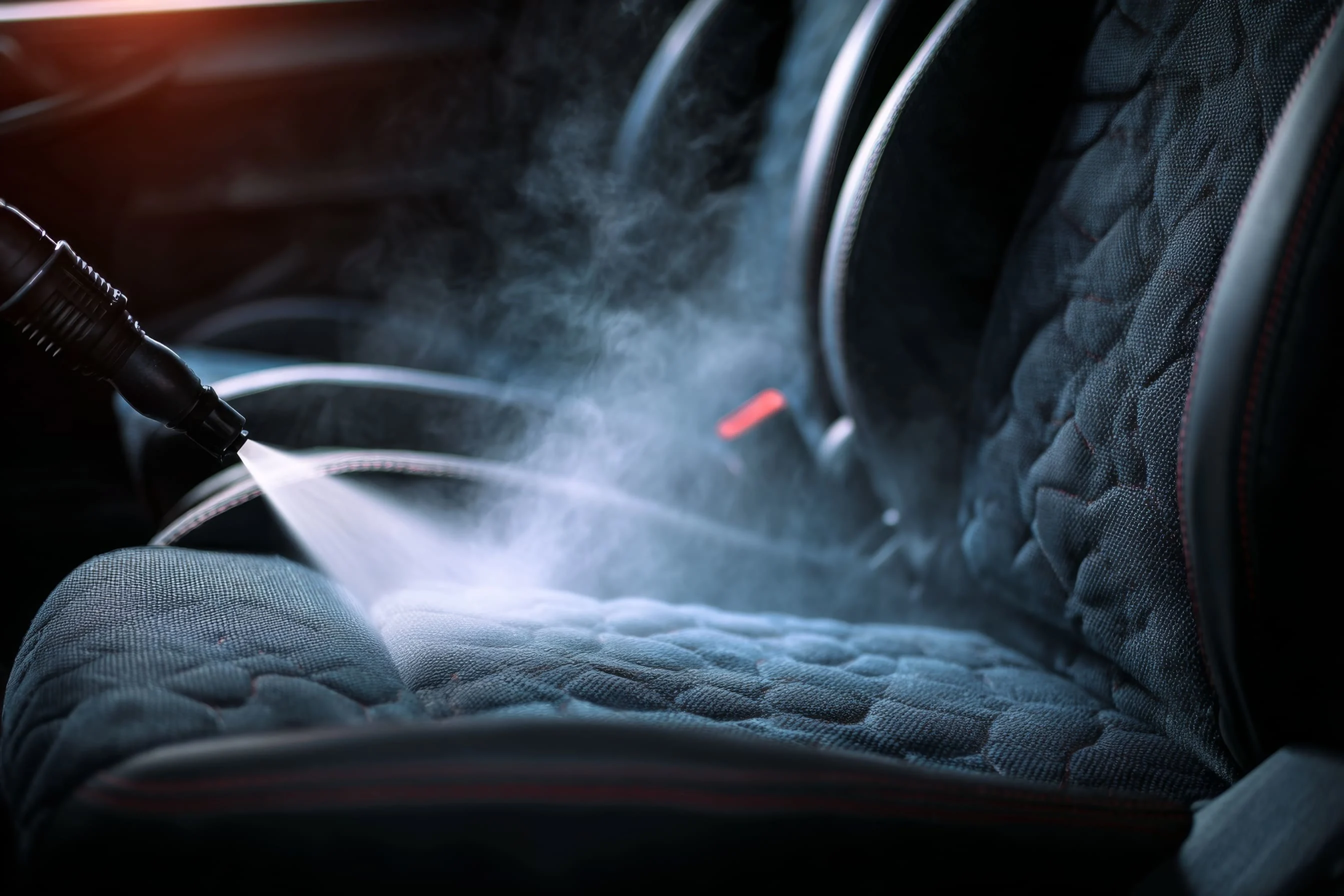
How to Remove Bad Smell from Car Interior
Rather than just hiding odours with a spray, you should apply baking soda on the upholstery and carpets, then let it sit for the night, and vacuum it up thoroughly. Activated charcoal, which can be placed under parents' car seats, also absorbs lingering odours over time.
Ozone generators deal well with a constant source of odour, such as that caused by smoke or pets. Cabin air filters should be changed regularly, as dirty filters will recirculate the same air containing harmful particles inside a vehicle.
Struggling with lingering odours in your vehicle? Read our guide on how to remove bad smells from your car interior.
The Often-Forgotten Areas
Wipe down the seatbelts to get rid of old oils that have accumulated. Wipe off the door jambs and hinges that usually accumulate grease. Always spray your cloth with glass cleaner to prevent over spraying on surrounding surfaces.
Discover how professional detailing goes beyond basic cleaning in our guide to car detailing services and benefits.
At WOW Car Wash, Goa's premium doorstep car cleaning service, we do every one of these finishing touches for you. They are not an option but are the standard.
Tips for Maintaining a Clean Interior
- To trap water and dirt, use a rubber mat.
- Use a wet wipe to quickly clean up spills and messes.
- Use a UV Protectant every season to prevent fading from the sun.
- To maintain your interior in showroom condition, there should be a light clean every 2 weeks and a deep clean every 3-6 months.
Conclusion
A structured system for cleaning the car interior allows for a drive that will be both clean and comfortable. Proper vehicle maintenance through proper use of appropriate tools and processes can help keep your vehicle looking great and performing as if it were new. If you are looking for professional car wash services, contact WOW Car Wash — Goa's trusted doorstep detailing service bringing quality care straight to your home.
FAQs
How frequently do I need to do an interior deep clean on my car?
Typically, every three to six months for those who drive regularly. Always try to remove any spill immediately in order to avoid any long-term effects.
What is the best technique for getting rid of undesirable smells inside my automobile?
Put some baking soda on your seat or floor mat, allow it to sit overnight, then vacuum it up. An ozone generator is the most effective method to remove particularly bad odours.
Is it safe to use steam cleaning on your car interior?
Yes! Steam cleaning is safe for your vehicle’s interior because it safely and effectively cleans your vehicle’s interior surfaces without the use of harsh chemicals. Steam cleaning can also eliminate dirt, bacteria, and odour.
How do you get rid of stinky dog smells in your car?
Use an enzyme-based cleaner to break down pet urine and dander, and then vacuum up all the hair and dirt from your pet’s fur.
Is it safe to clean the car with household products?
Yes. It can be done using a solution of equal parts of white vinegar and water for cleaning hard surfaces such as your dashboard and door panels.